

TempSync
Introduction
Silicon Power introduces TempSync Technology on microSD and SD card series. This innovation transcends the limitations of traditional software-only thermal management. By integrating hardware auto-frequency calibration with firmware thermal management, TempSync ensures stable, high-speed read/write performance within standard operating temperatures. In case of thermal anomalies, the system automatically triggers speed-reduction protection to guarantee overall operational stability.
Hardware & Firmware Thermal Management Mechanisms
Traditional microSD and SD cards rely solely on firmware to regulate operating frequencies. As shown in Figure 1 (left), the operating frequency tends to fluctuate with temperature; specifically, higher temperatures can lead to higher frequencies, which in turn increases the card's overall power consumption and heat generation. Consequently, a firmware-based monitoring mechanism is required to track controller temperatures. As illustrated in Figure 1 (right), the card enters a protective down-throttling mode when it hits abnormal temperature ranges to ensure continuous operation.
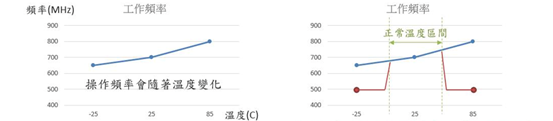
Figure 1
SP TempSync Technology breaks through these software-level constraints by implementing real-time frequency optimization directly at the hardware level. As shown in Figure 2 (left), the hardware’s built-in auto-frequency calibration allows the controller to maintain a consistent operating frequency even in harsh temperatures, independent of firmware intervention.
The synergy between hardware and firmware thermal management, as depicted in Figure 2 (right), maximizes operational value. This dual-layer approach activates speed-reduction protection under extreme environmental conditions, ensuring both device reliability and data integrity.
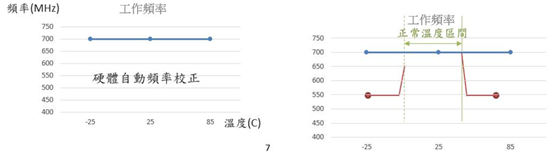
Figure 2